
Bespoke Spill Training - South Wales
We started working with a new client based in South Wales. The site was a long established, successful business which was based solely on the site, it had grown steadily over the previous 20 years; largely with the same workforce. Following the retirement of the previous Health, Safety and Environment Manager a new HSE Manager was hired. After a short time in the role the new manager identified gaps in policies, infrastructure and training related to spill response on site. We were commissioned to undertake a tailored spill training session for manufacturing and warehouse staff to ensure they had a competent spill response team in place.
As with all sessions, the course was made bespoke to the site, this included reviewing the spill response procedures and the drain plan for the site in addition to discussing the site specific spill risks and spill control measures with the site EHS manager.
From reviewing the spill procedures it was clear that they had not been updated in a long time and were outdated. Contact details for internal and external reporting were inaccurate and the procedures were very basic for a site with the client’s risk profile.
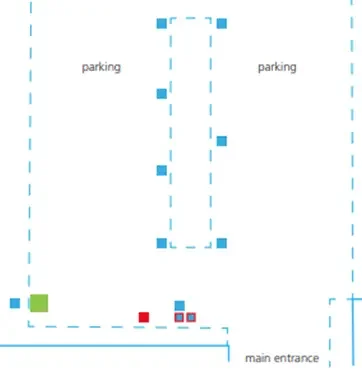
The drain plan had gully’s marked with colour coding of blue and red, but the connectivity, discharge points and significant features were not marked. Some of the gully’s were marked with a half blue half red squares which the EHS manager could not explain.
In order to get a proper understanding of the site’s drainage we arrived on site early to try and get clarity on the situation. The questioned manholes on site had been colour coded with a blue and red circle. The facilities team on site believed it was an interceptor, but the previous EHS manager had insisted it was combined drainage (where storm and foul drainage merged), so the unit had not been maintained. The lids had a significant amount of plant growth over the top and the facilities team said they had not been lifted in over a decade. There was an adjacent vent pipe which had been snapped off at knee level.
After lifting the lids it was evident it was an interceptor which had accumulated a significant amount of oil and solids, both beyond the compliance levels for a service. The solids were mainly polymer beads which were used extensively on site.
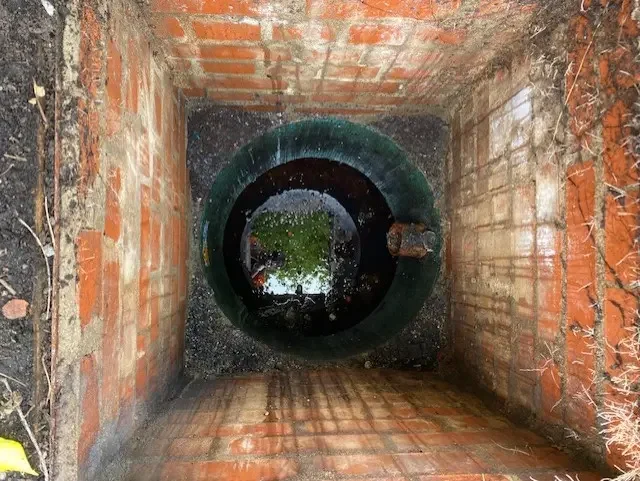
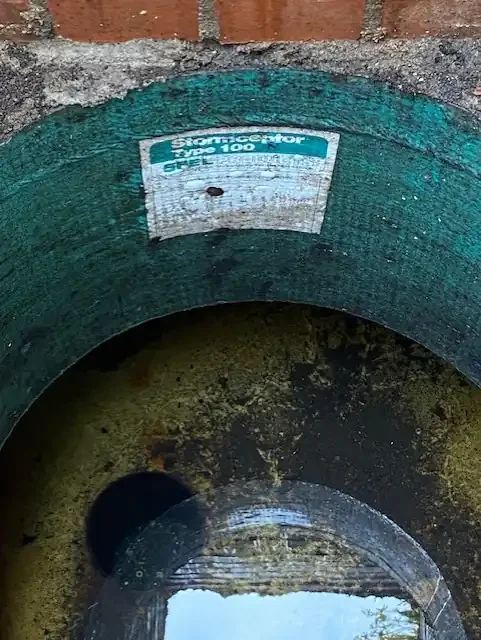
Anecdotal evidence from long serving staff was that polymer beads would regularly spill in the delivery yard, and that they were not effectively cleaned up, leading to a significant amount getting washed into the drains when it rained. They had also had an oil spill from a delivery HGV which the delivery company had washed down the drainage as part of their response to the spill.
This was consistent with what was found in the interceptor and we advised that practices on site and the procedures should be updated to ensure no pollutants were washed into, or allowed to enter the storm drainage. We also recommended silt socks be installed into the gullies to capture any further ingress of polymer beads.
Following the training we undertook a spill kit suitability assessment, where we identified the site’s spill kits were not suitable for the catchment areas they covered. We recommended a range of improvements including installing additional spill kits on site, ensuring they had an oil selective spill kit in the delivery yard and adding leak sealing paste and clay drain mats to the existing external spill kits.
We trained a group of 10 attendees, ensuring the site had spill response competency across different areas and shift patterns.
Following the training we provided the site a complimentary report recommending improvements which were required as a matter of urgency. All improvements were implemented by the site EHS manager significantly reducing the environmental risk the site posed.
Summary of spill preparedness improvements made:
Competent spill team established on site
Interceptor 5 yearly integrity service undertaken
Interceptor defects were repaired and the unit was added to the PPM schedule
The drains were jetted to remove the accumulation of polymer beads and a CCTV drain survey was conducted
A new, accurate drain plan was produced with significant features marked, and the manhole lids were repainted correctly
The procedures were reviewed and significantly rewritten
Silt socks were installed the the delivery yard gullies as a precautionary measure
Additional spill kits were purchased and existing spill kits were enhanced with additional equipment.
If you would like to discuss a bespoke spill training package for your site please contact us by phone or email and we will be happy to help.